Buy schachclub.eu ?
We are moving the project
schachclub.eu .
Are you interested in purchasing the domain
schachclub.eu ?
domain@kv-gmbh.de · 0541-91531010
Buy schachclub.eu ?
What is the possessive pronoun in Spanish?
The possessive pronoun in Spanish is a word that indicates ownership or possession. It agrees in gender and number with the noun it is referring to. Examples of possessive pronouns in Spanish include "mi" (my), "tu" (your), "su" (his/her/its/your formal), "nuestro/a" (our), and "vuestro/a" (your plural). **
What is a possessive pronoun in English?
A possessive pronoun in English is a pronoun that shows ownership or possession. Examples of possessive pronouns include "mine," "yours," "his," "hers," "ours," and "theirs." These pronouns are used to indicate that something belongs to a specific person or group. Possessive pronouns can stand alone or be used before a noun to show ownership. **

Similar search terms for Possessive pronoun
Top-Angebote
Products related to Possessive pronoun:
-
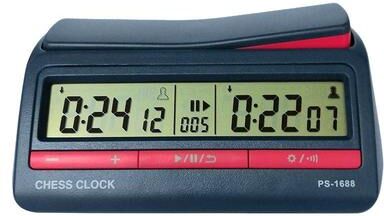
Multicon Wholesale Hub Professional Digital Chess Clock Timer With Count Up & Count Down For Tournament And Training Games Professional Digital Chess Clock Timer With Count Up & Count Down For Tournament And Training GamesExperience smoother, more competitive gameplay with this chess clock timer designed for players who value precision and focus. Whether you're preparing for tournaments, practicing strategy, or enjoying casual matches at home, this timer helps keep...103,97 $*Shipping: 0,00 $Secure redirect to the provider
-
Multisell Products Hub Easy To Play Chess Board Game Toy, Educational Strategy Table Games Easy To Play Chess Board Game Toy, Educational Strategy Table GamesEngage Your Mind with a Classic Chess Board Game The Chess Board Game Toy is a timeless strategy game that offers endless fun for both beginners and experienced players. Designed to be easy to play, this game is perfect for improving focus,...49,97 $*Shipping: 0,00 $Secure redirect to the provider
-
Uplift Picks Triangle Strategy Board Game Chain Chess Family Fun Logic Game 24x21 CmBring excitement to your game nights with this engaging strategy board game designed to challenge your thinking and spark fun competition. Perfect for both kids and adults, this family board game combines logic, planning, and interactive play. Its...47,98 $*Shipping: 0,00 $Secure redirect to the provider
-
Inspire Picks Magnetic Chess Board Game For Kids Strategy And Logical Thinking Fun ats30527 BSpark curiosity and sharpen young minds with a classic challenge made kidfriendly. This engaging magnetic chess board game helps children develop focus, patience, and problemsolving skills while having fun. Designed as a thoughtful educational logic...71,26 $*Shipping: 0,00 $Secure redirect to the provider



-
What is the difference between a possessive pronoun and a possessive adjective?
A possessive pronoun replaces a noun and shows ownership or possession, such as "mine," "yours," "his," "hers," "ours," and "theirs." On the other hand, a possessive adjective modifies a noun to show ownership or possession, such as "my," "your," "his," "her," "our," and "their." In essence, possessive pronouns stand alone, while possessive adjectives are used before a noun to describe who owns or possesses it. **
-
What is the difference between a personal pronoun and a possessive pronoun?
A personal pronoun is used to replace a noun and refers to a specific person or thing, such as "he," "she," or "they." On the other hand, a possessive pronoun shows ownership or possession, such as "his," "her," or "their." Personal pronouns indicate who is performing the action in a sentence, while possessive pronouns indicate who owns or possesses something. **
-
What is the possessive pronoun for the 3rd person singular in Norwegian?
The possessive pronoun for the 3rd person singular in Norwegian is "hans" for masculine gender and "hennes" for feminine gender. These pronouns are used to show possession or ownership of something by a singular third person. For example, "hans bil" means "his car" and "hennes bok" means "her book". **
-
In French, do you use an apostrophe with the interrogative pronoun "quelle" and the possessive determiner "ma"?
Yes, in French, you use an apostrophe with the interrogative pronoun "quelle" and the possessive determiner "ma" when they are followed by a word starting with a vowel or a silent "h". For example, "quelle est ton adresse?" (What is your address?) and "ma amie" (my friend). **


Is the friend possessive?
Yes, the friend is possessive. This is evident from the fact that they are trying to control the narrator's actions and decisions, as well as expressing jealousy and possessiveness over the narrator's other relationships. The friend's possessive behavior is unhealthy and can be damaging to the narrator's well-being and independence. It is important for the narrator to set boundaries and communicate their needs in order to maintain a healthy friendship. **
What does possessive mean?
Possessive refers to showing ownership or control over something. It is used to indicate that something belongs to or is associated with a particular person or thing. In grammar, possessive forms are used to show that a noun belongs to someone or something. **
Top-Angebote
Products related to Possessive pronoun:
-
Everyday Crate ElitePro Digital Chess Timer & Go Game Clock With 42 Tournament Timing Modes ElitePro Digital Chess Timer & Go Game Clock With 42 Tournament Timing ModesEvery move counts when the pressure is on. Designed for competitive players, clubs, coaches, and tournament organizers, this advanced digital chess clock delivers precise, reliable time control for intense matches. With 42 preset timing rules across...64,97 $*Shipping: 0,00 $Secure redirect to the provider
-
Inspired Living Classic Staunton Wooden Chess Pieces Set (32pcs) Tournament Chessmen Replacement Set aBring the timeless elegance of chess back to your table with wooden chess pieces that feel as good as they look. This complete 32piece set is designed for players who want a classic, balanced style thats easy to recognize and satisfying to play...23,97 $*Shipping: 0,00 $Secure redirect to the provider
-
Multicon Wholesale Hub Professional Digital Chess Clock Timer With Count Up & Count Down For Tournament And Training Games Professional Digital Chess Clock Timer With Count Up & Count Down For Tournament And Training GamesExperience smoother, more competitive gameplay with this chess clock timer designed for players who value precision and focus. Whether you're preparing for tournaments, practicing strategy, or enjoying casual matches at home, this timer helps keep...103,97 $*Shipping: 0,00 $Secure redirect to the provider
-
Multisell Products Hub Easy To Play Chess Board Game Toy, Educational Strategy Table Games Easy To Play Chess Board Game Toy, Educational Strategy Table GamesEngage Your Mind with a Classic Chess Board Game The Chess Board Game Toy is a timeless strategy game that offers endless fun for both beginners and experienced players. Designed to be easy to play, this game is perfect for improving focus,...49,97 $*Shipping: 0,00 $Secure redirect to the provider
-
What is the possessive pronoun in Spanish?
The possessive pronoun in Spanish is a word that indicates ownership or possession. It agrees in gender and number with the noun it is referring to. Examples of possessive pronouns in Spanish include "mi" (my), "tu" (your), "su" (his/her/its/your formal), "nuestro/a" (our), and "vuestro/a" (your plural). **
-
What is a possessive pronoun in English?
A possessive pronoun in English is a pronoun that shows ownership or possession. Examples of possessive pronouns include "mine," "yours," "his," "hers," "ours," and "theirs." These pronouns are used to indicate that something belongs to a specific person or group. Possessive pronouns can stand alone or be used before a noun to show ownership. **
-
What is the difference between a possessive pronoun and a possessive adjective?
A possessive pronoun replaces a noun and shows ownership or possession, such as "mine," "yours," "his," "hers," "ours," and "theirs." On the other hand, a possessive adjective modifies a noun to show ownership or possession, such as "my," "your," "his," "her," "our," and "their." In essence, possessive pronouns stand alone, while possessive adjectives are used before a noun to describe who owns or possesses it. **
-
What is the difference between a personal pronoun and a possessive pronoun?
A personal pronoun is used to replace a noun and refers to a specific person or thing, such as "he," "she," or "they." On the other hand, a possessive pronoun shows ownership or possession, such as "his," "her," or "their." Personal pronouns indicate who is performing the action in a sentence, while possessive pronouns indicate who owns or possesses something. **
Similar search terms for Possessive pronoun
-
Uplift Picks Triangle Strategy Board Game Chain Chess Family Fun Logic Game 24x21 CmBring excitement to your game nights with this engaging strategy board game designed to challenge your thinking and spark fun competition. Perfect for both kids and adults, this family board game combines logic, planning, and interactive play. Its...47,98 $*Shipping: 0,00 $Secure redirect to the provider
-
Inspire Picks Magnetic Chess Board Game For Kids Strategy And Logical Thinking Fun ats30527 BSpark curiosity and sharpen young minds with a classic challenge made kidfriendly. This engaging magnetic chess board game helps children develop focus, patience, and problemsolving skills while having fun. Designed as a thoughtful educational logic...71,26 $*Shipping: 0,00 $Secure redirect to the provider
-
Inspired Living Classic Staunton Wooden Chess Pieces Set (32pcs) Tournament Chessmen Replacement Set bBring the timeless elegance of chess back to your table with wooden chess pieces that feel as good as they look. This complete 32piece set is designed for players who want a classic, balanced style thats easy to recognize and satisfying to play...23,97 $*Shipping: 0,00 $Secure redirect to the provider
-
Uplift Picks Triangle Strategy Board Game Chain Chess Family Fun Logic Game 21x19 CmBring excitement to your game nights with this engaging strategy board game designed to challenge your thinking and spark fun competition. Perfect for both kids and adults, this family board game combines logic, planning, and interactive play. Its...42,98 $*Shipping: 0,00 $Secure redirect to the provider
-
What is the possessive pronoun for the 3rd person singular in Norwegian?
The possessive pronoun for the 3rd person singular in Norwegian is "hans" for masculine gender and "hennes" for feminine gender. These pronouns are used to show possession or ownership of something by a singular third person. For example, "hans bil" means "his car" and "hennes bok" means "her book". **
-
In French, do you use an apostrophe with the interrogative pronoun "quelle" and the possessive determiner "ma"?
Yes, in French, you use an apostrophe with the interrogative pronoun "quelle" and the possessive determiner "ma" when they are followed by a word starting with a vowel or a silent "h". For example, "quelle est ton adresse?" (What is your address?) and "ma amie" (my friend). **
-
Is the friend possessive?
Yes, the friend is possessive. This is evident from the fact that they are trying to control the narrator's actions and decisions, as well as expressing jealousy and possessiveness over the narrator's other relationships. The friend's possessive behavior is unhealthy and can be damaging to the narrator's well-being and independence. It is important for the narrator to set boundaries and communicate their needs in order to maintain a healthy friendship. **
-
What does possessive mean?
Possessive refers to showing ownership or control over something. It is used to indicate that something belongs to or is associated with a particular person or thing. In grammar, possessive forms are used to show that a noun belongs to someone or something. **
* All prices are inclusive of VAT and, if applicable, plus shipping costs. The offer information is based on the details provided by the respective shop and is updated through automated processes. Real-time updates do not occur, so deviations can occur in individual cases. ** Note: Parts of this content were created by AI.